





Fixing a burst pipe takes three steps: stopping pressurized water, replacing the broken section, and drying soaked rooms before rot or mold starts. Not every break sprays water across the floor. A hidden crack behind drywall or above a ceiling shows up through quieter signs: hissing or rushing water when every tap is closed, a sudden drop in whole-house water pressure, spreading stains on walls or ceilings, or a water meter that keeps spinning with nothing running. Once you spot those signs, shut the water off right away instead of guessing at the cause or tearing open good drywall.
Immediate Steps When a Pipe Bursts
- Close the main shutoff valve where water enters your basement, garage, or utility closet, or shut the curb valve at the street meter box if the indoor valve is stuck or frozen.
- From a dry floor only, flip off the electrical breakers for any wet rooms and shut down the water heater. Leave the house at once if water reaches your electrical panel.
- Open the lowest and highest faucets and flush the toilets to drain trapped water and relieve leftover line pressure.
- Take timestamped photos and video of the break, standing water, and wet rooms before you move any belongings or start cleanup.
Can You Fix a Burst Pipe Yourself
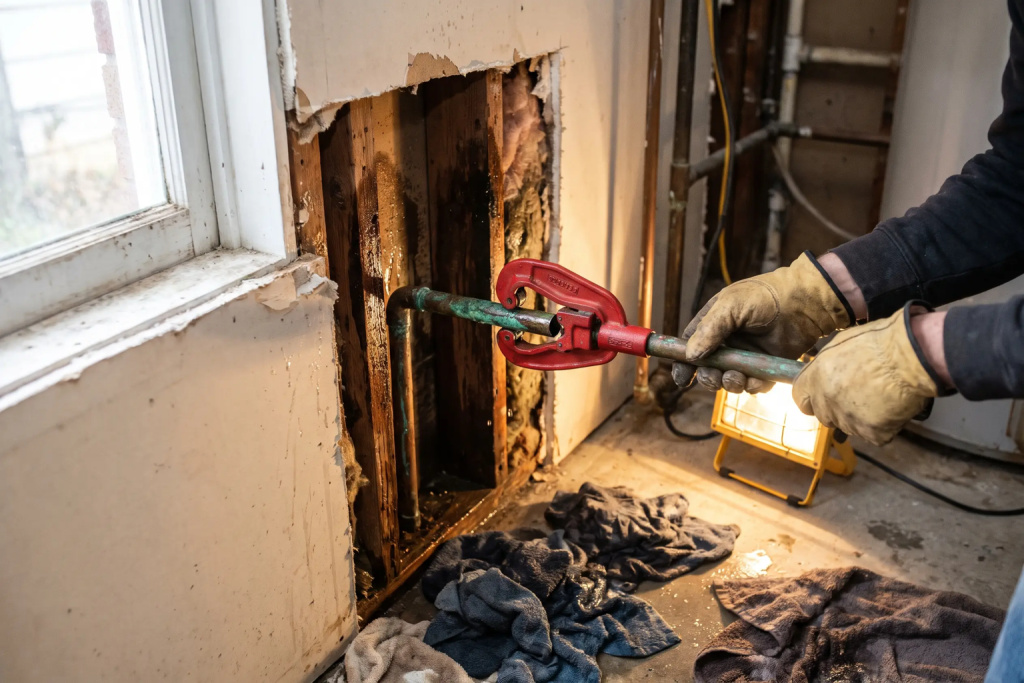
Household residential plumbing systems run at 40 to 80 PSI, which pushes straight through duct tape, glue, and weak patches. Hardware store fixes like rubber-lined repair clamps, self-fusing silicone tape, and two-part epoxy putty hold back a small drip on an exposed pipe for a few hours at most, and they are never a permanent fix. A lasting DIY fix works only when you can easily reach a short break in copper or PEX, cut out the split section, and join solid pipe ends with a push-to-connect slip coupling or crimp fitting. Old corroded galvanized steel, breaks hidden inside walls, tight framing near torch soldering, and freeze-split lines need a permanent code-compliant repair, and you should never thaw a frozen pipe with an open flame.
When to Call a Licensed Plumber
Some breaks are not safe or smart to tackle on your own. Splits inside walls, ceilings, or concrete slabs, water near electrical wiring, crumbling galvanized pipes, and insurance rules asking for a licensed invoice all call for licensed emergency plumbers for pipe repairs. Most repair visits take 1 to 4 hours. A plumber makes sure the water is off, checks frozen runs for extra splits, cuts back to sound copper, PEX, or CPVC for a code-compliant splice, and brings pressure back slowly to test every joint. Before work starts, ask for a written estimate, confirm any after-hours dispatch fee, and check whether drywall and paint restoration are excluded.
What Burst Pipe Repairs Cost
Typical US burst pipe repairs run $150 to $1,500 and average around $500, while underground lines and wall restoration raise totals.
| Repair Location or Cost Factor | Typical Scope and US Cost Benchmark |
|---|---|
| Exposed basement or utility pipe | Direct access keeps labor short, usually $150 to $500 |
| Pipe inside a finished wall | Cutting and access add cost, $500 to $1,500 plus $1.50 to $3.50 per sq ft drywall patching |
| Underground main vs. sewer line | Trenching pushes main water lines to $500 to $2,000 and sewer lines to $1,000 to $4,000+ |
| Rate and timing drivers | Labor runs $45 to $200 hourly plus per-linear-foot pipe cost and $100 to $300+ after-hours fees |
Water Damage Cleanup and Insurance
Drying Soaked Rooms Before Mold Starts
Mold begins growing in wet drywall, carpet padding, and wood framing within 24 to 48 hours, so drying starts the moment electrical hazards are clear. Clear standing water with buckets, mops, and a wet-dry vacuum, move wet rugs outside, pull out soaked wall insulation, open cabinet doors for airflow, and run fans alongside dehumidifiers. Never run central heating or cooling if dirty or sewage water spilled inside. When water soaks deep into wall cavities or subfloors, hiring a crew with commercial drying equipment keeps trapped moisture from rotting the frame.
What Homeowners Insurance Covers
Standard homeowners insurance usually pays for sudden, accidental water damage to ceilings, walls, floors, and personal property, often excludes the cost of repairing the failed pipe itself, and denies claims tied to old neglected leaks, poor upkeep, or unheated vacant homes. Notify your insurer right away and keep timestamped pre-cleanup photos, licensed plumber invoices, and drying receipts before tossing damaged materials. If you rent, document the break for your landlord right away and check your own renters policy for damaged belongings.